
Erased On Paper

In 2026, the United States will mark 250 years since its founding — a milestone that invites celebration, reflection, and national pride. Across the country, banners will fly, reenactments will unfold, speeches will praise liberty and democracy, and the familiar words of the Constitution will once again be recited with reverence.
“We the People.”
But as America prepares to commemorate its birth, a harder question deserves equal attention: Who, exactly, was included in that promise — and who was quietly left out?
The founders’ language was bold and aspirational, yet the reality of early America was far narrower. Millions of people living within the nation’s borders — enslaved Africans, Indigenous nations, women, and countless marginalized communities — were excluded from political power, legal recognition, and full citizenship.
Their labor built the economy. Their land anchored expansion. Their lives shaped the nation’s trajectory. Yet their names, rights, and identities were often missing from official records.
History books tend to frame this exclusion as a moral failing that was eventually corrected through constitutional amendments and civil rights victories. That narrative is comforting. It suggests progress resolved the problem.
The truth is more complicated.
Much of America’s erasure did not occur through violence alone. It happened quietly — through paperwork. Through census classifications that distorted identity. Through land deeds that erased rightful ownership. Through court rulings that redefined lineage. Through recordkeeping systems that valued some names while ignoring others. Over generations, these administrative decisions reshaped families, severed histories, and altered legal standing in ways still affecting Americans today.
This is precisely the question explored — and answered — by authors C.B. Deane and Venita Benitez in their manuscript Erased on Paper: How American Law Rewrote Identity and Left Us Out of “We the People.” Through legal analysis, archival research, and personal discovery, their work reveals how identity itself was rewritten not only by culture, but by law.
Authors C.B. Deane and Venita Benitez
Continues After Sponsor's Messages Below...

Authors C.B. Deane and
Venita Benitez Continues Below...
 |
| Order On Amazon |
Their research shows that families lost surnames, children inherited imposed classifications, land ownership shifted through administrative maneuvers, and entire lineages disappeared from official documentation. These were not isolated mistakes. They were systemic practices embedded in legal frameworks and public institutions.
For many Americans, the search for their own ancestry eventually exposes these fractures: a missing census entry, a sudden racial reclassification, a deed that contradicts oral history, a birth record that conflicts with family memory. These are not clerical accidents — they are evidence of how power once dictated whose identity deserved permanence.
The consequences extend far beyond genealogy. Legal identity shapes inheritance rights, citizenship claims, land access, tribal recognition, and generational wealth. When identity was altered generations ago, families today continue to navigate the legal and emotional fallout.
America’s 250th anniversary offers a rare opportunity not only to celebrate democratic ideals, but to examine the systems that contradicted them. Patriotism does not require selective memory. It requires honest reckoning.
This is not about retroactive blame. It is about understanding how institutional choices ripple across centuries — and how truth, once restored, can reshape justice moving forward.
The phrase “We the People” was always aspirational. Its meaning was never static. The question before us now is whether, 250 years later, we are willing to fully confront the cost of who was excluded — and who still bears that legacy.
Anniversaries shape national memory. They influence what future generations inherit as truth. If America250 becomes only a celebration of triumph, it risks repeating the same omissions that erased so many voices in the first place.
But if this moment invites courage alongside pride — clarity alongside celebration — then the next 250 years can be grounded in a more complete and honest understanding of our national identity.
Because the measure of a nation is not only what it celebrates — but what it finally chooses to remember.
— C.B. Deane & Venita Benitez...

Published Author in Her Family

Alexis Donald, MD, a trailblazing African American medical doctor and advocate for empowering young minds, is thrilled to announce the release of her highly anticipated children’s book, Mommy I Want to be a Doctor. Based on her own remarkable journey, this captivating story encourages children to dream big, believe in themselves, and fearlessly pursue their aspirations.
As the first medical doctor in her family, Dr. Alexis has always been driven by a passion for medicine and a desire to make a difference in the world. Her inspiring tale begins with her childhood dreams and takes readers on a heartfelt journey of determination, resilience, and triumph. To Order Her Book Click Here or on Amazon.
To see our exclusive interview with Dr. Donald Tap here.
New Self-Help Book “Blame It on the Feel of Pain” About Detangling From Past Pain

Get ready for a transformational journey toward inner peace as indie author Max W. Miller’s new self-help release, Blame It On The Feel Of Pain, inspires readers in a witty, down-to-earth book. Truth and compassion are foretold, using poetic frames called ‘The Wises,’ and the help of opinionated little emojis bringing laughter and thought-provoking conclusions throughout.
The author encourages her readers, whom she also calls partners, to stop wrestling with the hard knocks of the past. She expresses how voluntarily walking back into time precedes trauma healing. Confronting lingering pains is a step toward strength and hope for the future. ‘Blame It’ delves into the author’s life experiences, bringing to life the importance of using Full Circle Moments to find resolutions.
Throughout Blame It On The Feel Of Pain, the reader grows to understand through a unique interpretation that what we are destined to become grows out of the years we’ve already traveled. Further, our future hinges on how we address the pains of the past. Other expressions focus on how desires in the present are carved out of having a clear vision that old, lingering strongholds must be defeated. A history of suffering is a prerequisite for becoming fed up enough to demand enjoyment now!
To Get On the Road To Overcoming Your Trauma See Her Exclusive Interview
Order Her Book Blame It On The Feel Of Pain
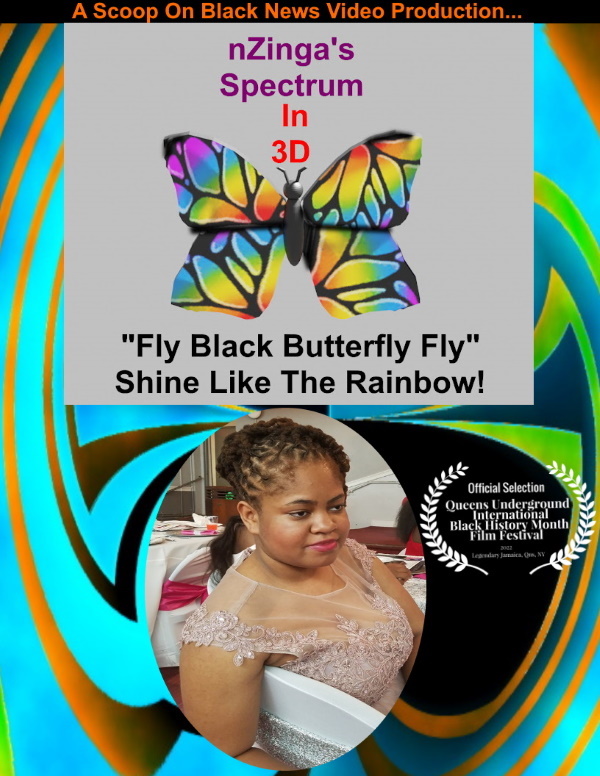
nZinga Austin is also the Co-publisher of Our Black News Scoop and Southeast Queens Scoop. The documentary of about 1/2 hr long is getting rave reviews.


No comments:
Post a Comment
Share your comments with us. No post SPAM please - it will be deleted. Only real comments please.