

By Renee Williams
Nia Robinson is a 31-year-old coordinator in Atlanta who is done feeling powerless in the doctor’s office.
“I’m not just ‘another patient’ in a gown; I am a woman who refuses to become a statistic because a doctor wouldn’t listen.”
Her words hit even harder when we look at what’s happening in hospitals today.
Recently, more than 500 women filed a lawsuit against Chesapeake Regional Medical Center in Virginia. They say a former doctor there performed unnecessary surgeries, including hysterectomies and other major procedures, that they didn’t truly need.
One attorney called this case:
“Perhaps the single largest case involving civil rights violations of humans in our lifetime.”
Think about that.
Hundreds of women. Their bodies were cut open. Life-changing surgeries they may not have needed. All inside a system that was supposed to protect them.
This isn’t just about one bad doctor. It’s about power.
Who has it?
Who doesn’t?
And what happens when we walk into exam rooms with no tools, no proof, and no backup?

The Problem: When We’re Not Heard, We Become “Cases”
Black women have carried stories of dismissal, disrespect, and danger in healthcare for generations. Now those stories are showing up in courtrooms and headlines.
The truth:
Black women are about three times more likely to die from pregnancy-related causes than white women.
Our pain is more likely to be ignored, minimized, or misdiagnosed.
Our concerns about periods, pregnancy, postpartum, and menopause are often brushed aside with “you’re fine” or “it’s in your head.”
The Chesapeake Regional case is one extreme example, but many of us know smaller — and still life-threatening — versions.
And this doesn’t just happen to women without money, status, or fame.

Statistic (Part 1) by Renee Williams
Continues Below...

Serena Williams: Proof That No Amount of Fame Protects Black Women from Being Ignored
Serena has a well-documented history of blood clots. She knows her body and her risks. When she began to feel short of breath and unwell, she immediately suspected a pulmonary embolism — a blocked artery in the lungs that can be fatal.
Instead of being rushed into testing, she had to insist that something was wrong and push the medical team to take her seriously. When they finally ran the tests, her suspicion was confirmed: she did, in fact, have blood clots in her lungs.
Her ordeal didn’t end there:
After her C-section, she had a sudden, intense coughing fit that caused her incision to pop open.
When surgeons investigated, they found a large hematoma (a collection of blood) in her abdomen, caused by blood thinners.
She needed another surgery.
She was bedridden for weeks during what should have been a time of healing and bonding with her baby.
Serena has been clear about what made her experience worse:
Not just the medical complications
But the failure of medical staff to initially take her symptoms seriously, despite her history
The delay between her saying, “Something is wrong,” and the system acting on it
If a Black woman who is one of the most famous athletes on earth — wealthy, educated, medically informed about her own condition — has to fight this hard just to be tested and treated in time, what does that say for the rest of us?
It says this:
Our risk factors are real.
Our intuition is sharp.
And yet, we still have to argue for basic care.
Serena’s story is not an exception; it’s a mirror. It reflects what so many Black women experience, just without the cameras and interviews.
When people say, “Trust your doctor,” we know that trust has to be earned, not demanded.
And trust without tools is not protection.
Where We Go From Here
The Chesapeake case and Serena’s story sit on the same spectrum:
Women do not fully believe.
Women are not fully informed.
Women bear the consequences in their bodies.

👉 If you already know this problem in your bones and want to help build community, you can learn more about supporting CycleSync here We are actively building and planning our next stage of growth at TryCycleSync.com
If you’re an investor, ally, or community member who believes Black women deserve tools — not just apologies — you can review our investment materials here:
👉 CycleSync Investment Deck

Published Author in Her Family

Alexis Donald, MD, a trailblazing African American medical doctor and advocate for empowering young minds, is thrilled to announce the release of her highly anticipated children’s book, Mommy I Want to be a Doctor. Based on her own remarkable journey, this captivating story encourages children to dream big, believe in themselves, and fearlessly pursue their aspirations.
As the first medical doctor in her family, Dr. Alexis has always been driven by a passion for medicine and a desire to make a difference in the world. Her inspiring tale begins with her childhood dreams and takes readers on a heartfelt journey of determination, resilience, and triumph. To Order Her Book Click Here or on Amazon.
To see our exclusive interview with Dr. Donald Tap here.
New Self-Help Book “Blame It on the Feel of Pain” About Detangling From Past Pain

Get ready for a transformational journey toward inner peace as indie author Max W. Miller’s new self-help release, Blame It On The Feel Of Pain, inspires readers in a witty, down-to-earth book. Truth and compassion are foretold, using poetic frames called ‘The Wises,’ and the help of opinionated little emojis bringing laughter and thought-provoking conclusions throughout.
The author encourages her readers, whom she also calls partners, to stop wrestling with the hard knocks of the past. She expresses how voluntarily walking back into time precedes trauma healing. Confronting lingering pains is a step toward strength and hope for the future. ‘Blame It’ delves into the author’s life experiences, bringing to life the importance of using Full Circle Moments to find resolutions.
Throughout Blame It On The Feel Of Pain, the reader grows to understand through a unique interpretation that what we are destined to become grows out of the years we’ve already traveled. Further, our future hinges on how we address the pains of the past. Other expressions focus on how desires in the present are carved out of having a clear vision that old, lingering strongholds must be defeated. A history of suffering is a prerequisite for becoming fed up enough to demand enjoyment now!
To Get On the Road To Overcoming Your Trauma See Her Exclusive Interview
Order Her Book Blame It On The Feel Of Pain
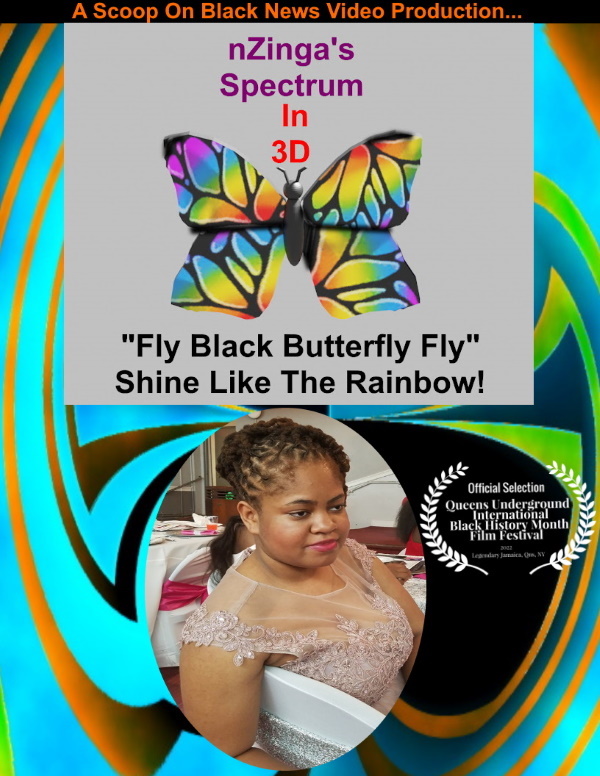
nZinga Austin is also the Co-publisher of Our Black News Scoop and Southeast Queens Scoop. The documentary of about 1/2 hr long is getting rave reviews.


No comments:
Post a Comment
Share your comments with us. No post SPAM please - it will be deleted. Only real comments please.